



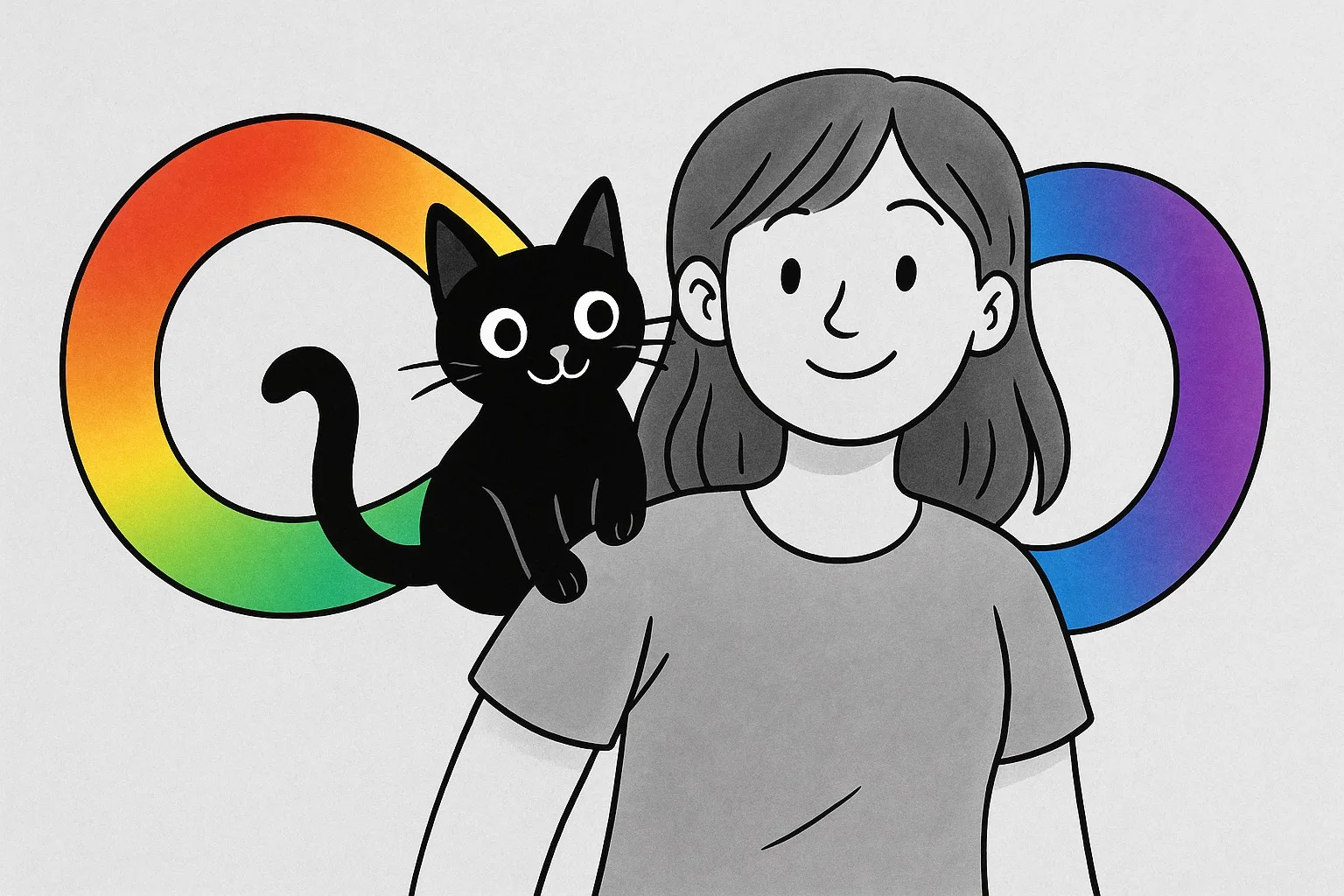
Today I’m introducing the “Crossed Spectra” category. The goal: to give the floor to other people concerned. Spectrum & Cycles is not meant only to let me tell my whole life story, but also to share other experiences, just as embodied, raw, and unfiltered. I therefore invited my friend Jeanne to speak and explain in detail what autism in women looks like and to share her lived experience. (And I disclaim all responsibility for her touches of humor in the titles — I did ask her to include some!)
I like to think that my mind is formatted, entirely conditioned by my environment, that I have no real control over it.
It is shaped not only by the outside world, but also — and especially — by my inner world. For a long time, I neither listened to nor took the latter into account, even though it teems with all kinds of information.
The first time I became aware of the power of the signals my body was sending to my mind was when I was, once again, vomiting in the family car.
You see, despite countless trips and years of wear, that vehicle still carried lingering smells of new leather and plastic — absolutely unbearable to my sensitive sense of smell.
Among all the children and adults I have met since, I have never encountered anyone who shared a memory similar to mine: the painful memory of nauseating, energy-draining car rides.
My parents thought I was “putting on a show”; my grandparents preferred to call it “theatrics.” The vocabulary field remains the same — that of imagination and performance. A child like me, a dramatist at heart, could only be lying and staging her vomiting to avoid climbing into a modern steed bound for unknown destinations.
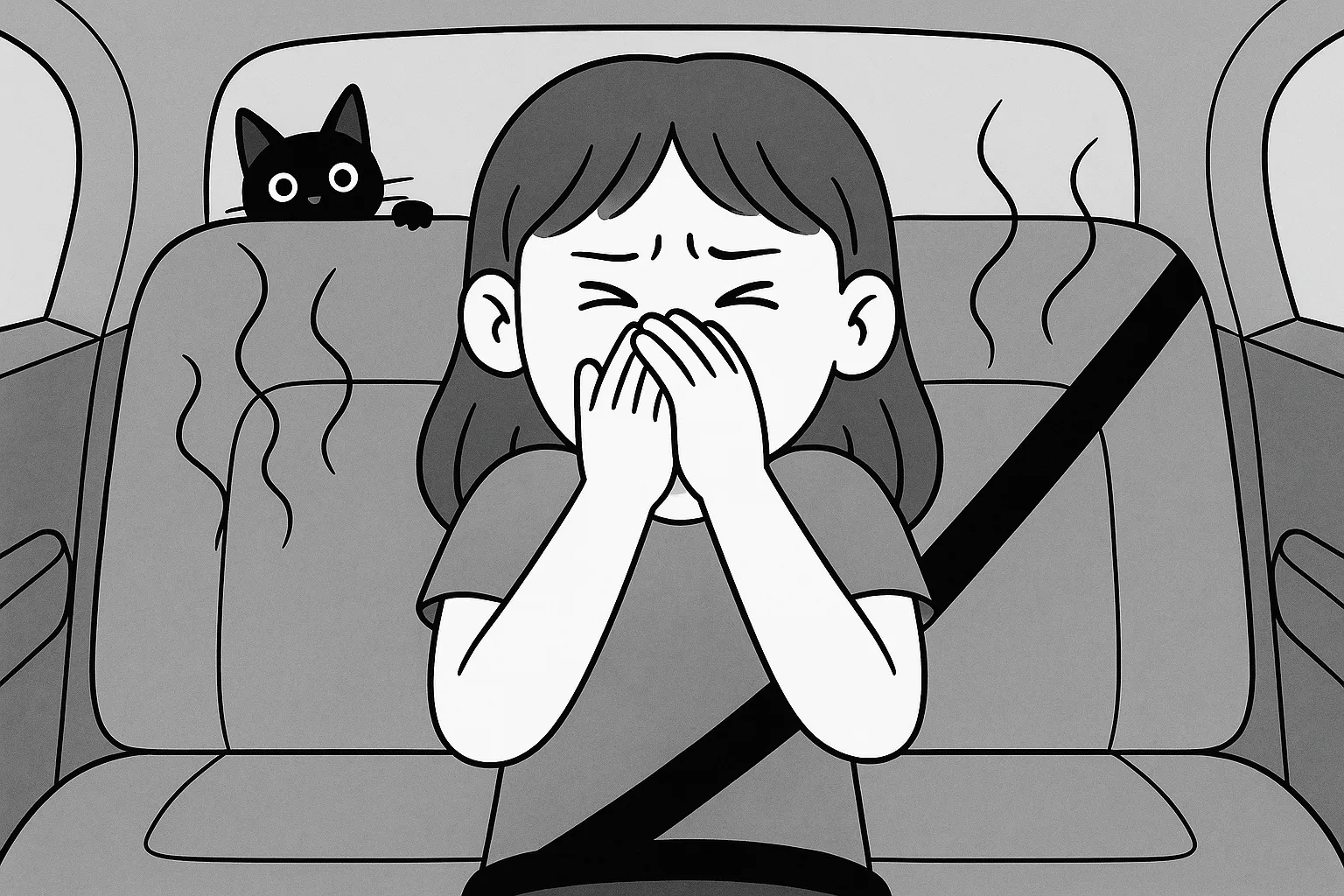
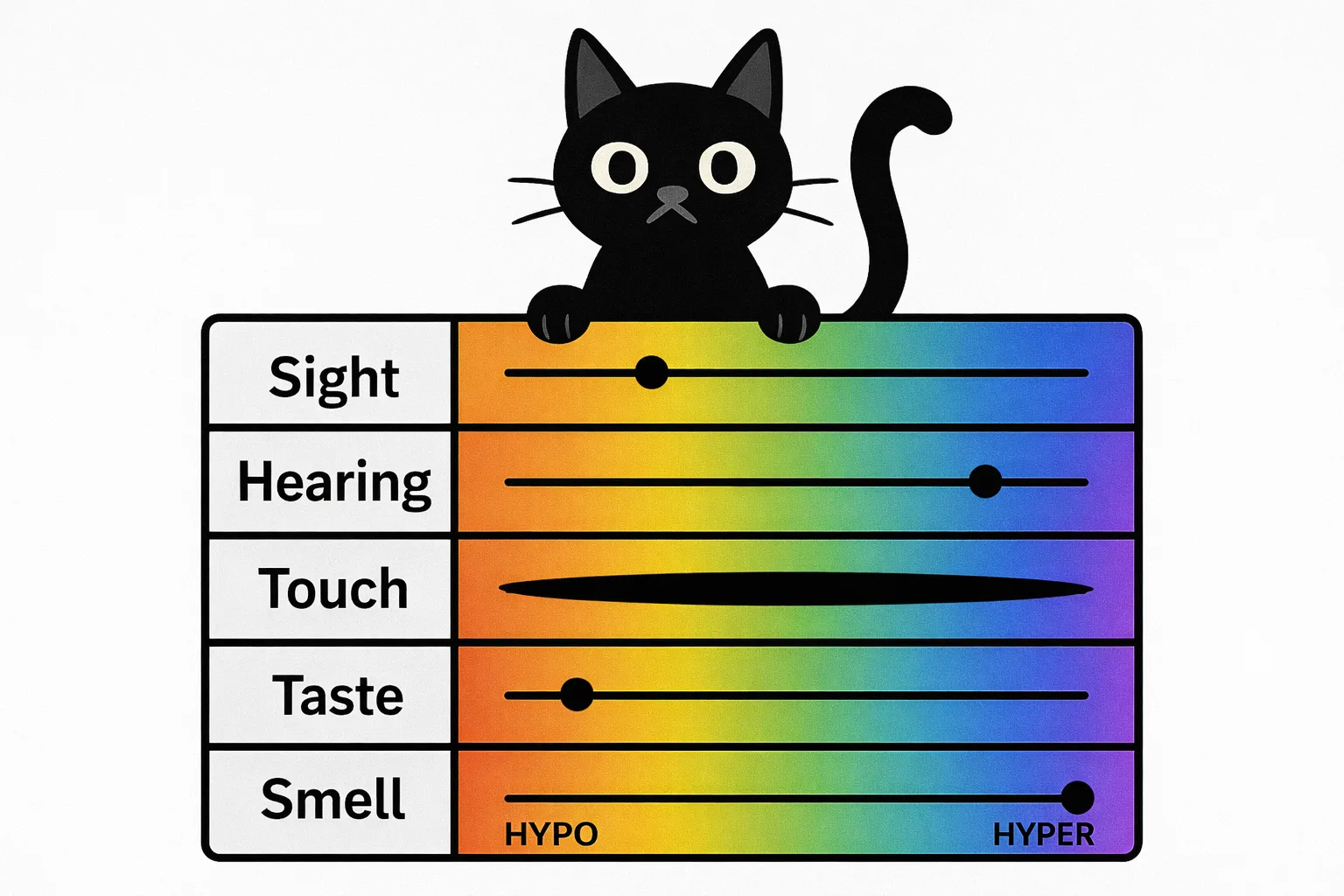
Our dear Diagnostic and Statistical Manual of Mental Disorders, Fifth Edition (DSM-5), provides a diagnostic criterion in autism: altered sensory perception. It can manifest as sensory hypo- or hypersensitivity, referring to increased reactivity to sensory stimuli such as light, sound, touch, taste, and smell.
All of this, I only came to understand much later…
What is autism in women?
What is ASD?
Autism spectrum disorder (ASD) is a neurodevelopmental condition characterized by persistent differences in social communication and interaction, as well as restricted patterns of behaviors, activities, and interests.
Even today, it is still diagnosed far more often in boys worldwide, generally at a relatively early age.
Later diagnosis in women
One may legitimately wonder why girls receive a later diagnosis (typically in adulthood in cases of ASD without intellectual disability), and why the ratio still remains roughly 1 autistic girl for every 4 autistic boys.
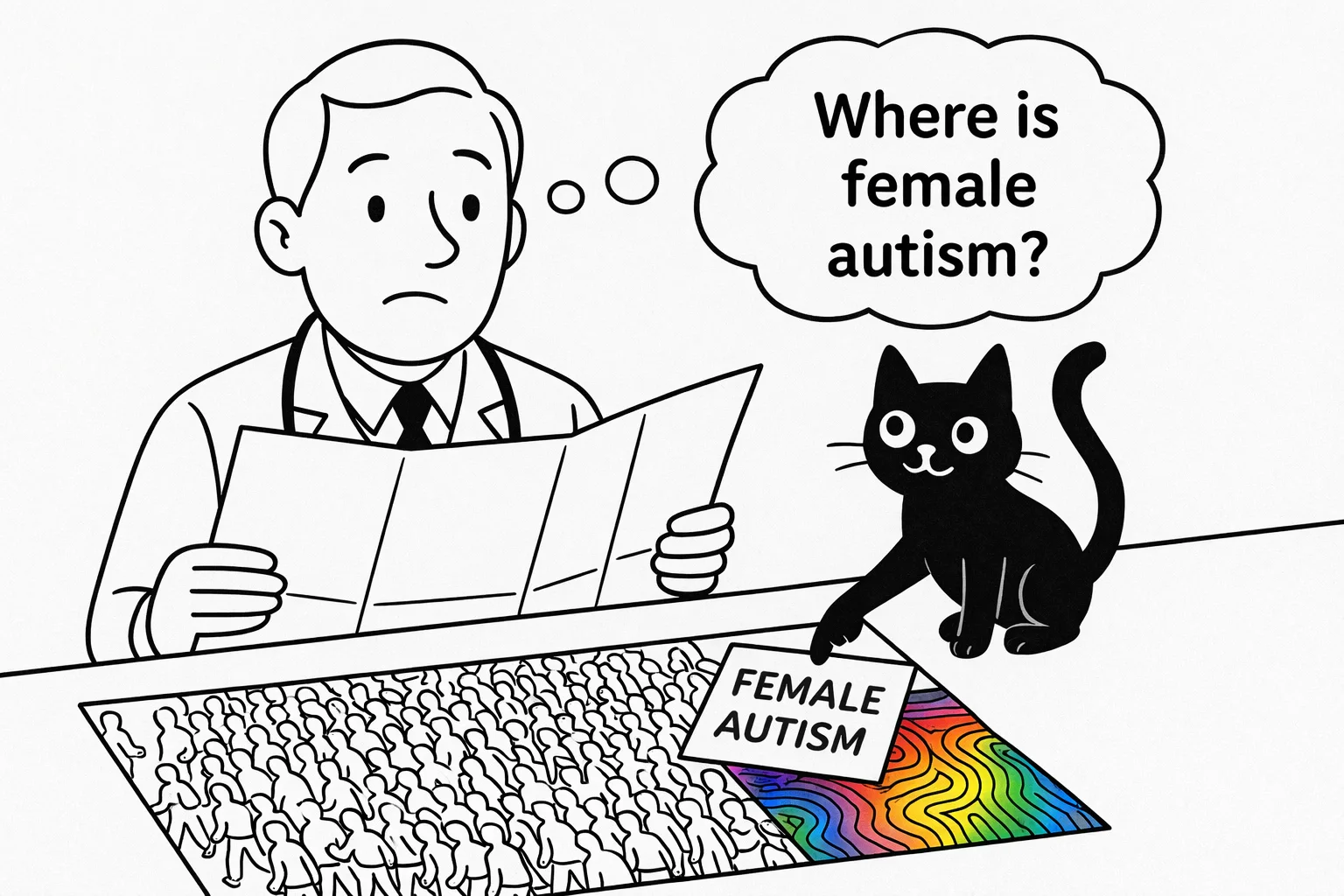
Several hypotheses can be considered. The first lies in our genes: the female sex may be genetically protected against the mutations or biological differences associated with autism. Therefore, for autism to manifest, a greater accumulation of genetic or environmental risk factors may be required compared to boys.
Different gender socialization
Clinical presentations must also be considered for a clear and comprehensive diagnosis: they differ noticeably from those of their male peers.
It is observed that very early on, girls without intellectual disability or language delay intellectually grasp certain aspects of socialization and compensate for their difficulties by closely copying and mimicking those around them (of course, intuition plays little role here — this is pure imitation, without full understanding of subtext or possible interpretations). This is likely linked to socialization that encourages girls to orient toward others, to pay attention and care for them.
Stereotypes
Stereotyped behaviors are also more visible in boys than in girls, and often more pervasive.
Comorbidities
Associated conditions also tend to appear in more visible, externalized ways in males (ADHD, behavioral and oppositional disorders with frequent anger, agitation, shouting, and crying), whereas in females they tend to be more internalized (eating disorders, depression, anxiety). These presentations can mask an autism diagnosis at any age, especially given that diagnostic criteria are still largely based on male presentations.
Whim
An important point is that girls also have so-called restricted interests (which would be called a “passion” in an allistic person), but because these interests are generally more socially acceptable, they are often seen as mildly absorbing quirks rather than something that significantly impacts the child’s life.
Hope
The distinction is therefore clear: women’s behaviors, stereotypes, desires, and outward manifestations differ meaningfully from those of men.
I will not raise here the question of why a sex-sensitive differential diagnostic framework does not yet exist, although I have my own thoughts on the matter.
I hope — and I remain cautiously optimistic — that women will eventually have their own tailored assessment frameworks, allowing their specific traits and difficulties to be better recognized.
My journey
Definitions:
CRA: French regional autism center providing specialist information and assessments.
CMP: French public community mental-health center.
My twenties
At 20, I went through something very few people experience at that age: the loss of my fiancé.
This event gave me the space to refocus on myself and my desires. I began to realize many things I had previously been unaware of, simply because I had never taken the time to analyze them.
People did not really know me. Around me, my loved ones and family held an image I had constructed — one that did not resemble me at all: a pleasant, fairly talkative and cheerful girl who perfectly fulfilled the role prescribed to her — dress like a young woman, remove body hair, wear makeup, study literature and dislike mathematics, enjoy partying and going out, not talk too much, listen above all, keep up with the latest gossip, and so on.
My adolescence
At 15, I actually liked mathematics, but I quickly understood it wasn’t considered cool. I wanted to fit in, so I observed, imitated — and came home in the evenings exhausted and in tears.

It never worked: I was embarrassing. I was too loud, I spoke like a child — I was “too much.”
My adolescence, but younger
At 12, I loved dressing in pink; it was the height of embarrassment. I was bullied for it, because from head to toe I was dressed in cotton-candy colors (the bag, the underwear, and the hair clip too, of course).
My childhood
At 6, I was alone in the schoolyard. The others didn’t want to play with me; no one ever welcomed me. I resented a girl in my class who, the year after I arrived, was given the full red-carpet treatment as a welcome gift (it’s a metaphor — there was no actual red carpet. She was simply warmly included within a few hours, whereas I never managed it in several years, without understanding why).
Normiland
These stories may seem anecdotal, but they shaped the person I became: a smooth, well-adjusted young woman, with aspirations and problems expected for her age and for the way she was supposed to think.
The revelation
Until I decided to question everything: why did I have such intense crying spells before and after every social event, every workday, every seemingly trivial action? Why didn’t I know what to say or do when I had a disagreement with someone, and why was I told I sounded like I was reciting an emotionless script when I tried, unsuccessfully, to resolve the issue?
Even now, I still wonder: what do people actually say to each other when they meet, and why do they end up saying they like each other when they have just met and — from what I perceive — just argued so vehemently?
Rain Man
Several people had already mentioned autism to me; I was even compared to Raymond Babbitt (for those who get the reference: no, I cannot instantly count the exact number of matches dropped on the floor).
The CRA
In this process of re-examining myself, I decided to contact specialists on the subject, so I contacted my nearest regional autism center, known in France as a CRA. After several months of waiting, multiple tests, and many unanswered questions, the feedback day arrived: I was indeed autistic, described as high-functioning autistic, Asperger type.
It took me a very long time to believe it. I didn’t think I was autistic — not when I was so “normal” (or so I believed).
The CMP
Years later, after yet another job that drained both my energy and my anxiety levels, I decided to see a psychologist, who promptly referred me to a CMP. There, I explained: I was working 24 hours (more hours are very hard for me to tolerate, having tested it), with a small and caring team, yet I slept more than 10 hours a night, collapsed from exhaustion when I got home, had frequent anxiety attacks, and sometimes had to leave crowded rooms to go cry — which, of course, sparked comments around me.
With determination, and after several appointments, my new psychiatrist advised me to seek an autism assessment at the CRA.
I told her I had already received one, and from there, appropriate supports were put in place for my situation.
What are my specific traits?
Adage
As the saying goes: “When you’ve met one autistic person, you’ve met one autistic person.” In other words, every autistic person is different.
Our interests are not all about toy trains and dinosaurs; our sensory sensitivities differ, as do our relationships with others.
Communication
What long made me believe I was not autistic was how easily I can converse with people (or at least, that is my belief). I met an autistic girl who feels no shame about her passions and does not know the script that would tell her what question to ask whom and when. I am good at this (again, my belief), and I carefully hide what I cherish and what could be pointed at or mocked.
I have lived in this world having learned one essential thing: people love talking about themselves, and they are satisfied with very basic conversations. This is not a criticism. It has been shown that what is called small talk is actually very useful for creating contact, building closeness, and forming bonds. Very roughly speaking, dogs sniff each other, horses engage in grooming, bonobos share a meal and (yes) have sex — and we talk. About nothing important? That’s okay.
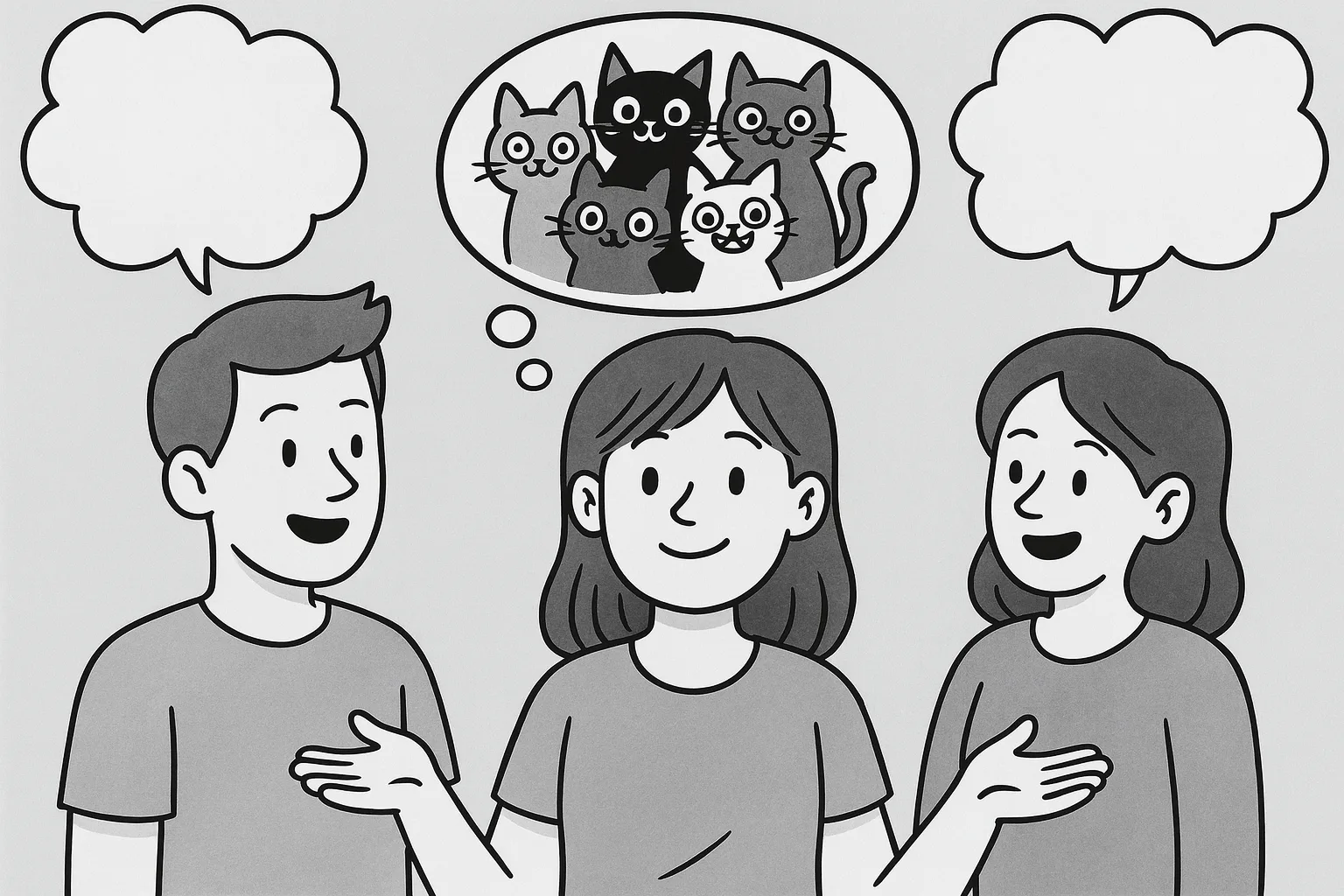
I understood this fairly early — I was a teenager. I closely watched people’s body language and practiced their expressions in the evening, in front of my mirror.
With all this in hand today, it is very easy for me to appear completely allistic (still my belief!).
Sensory sensitivities
I don’t know whether this fully counts, but a friend recently pointed out that my threshold for processing incoming information is extremely low. If I hear more than two questions in a row, my heart starts racing, my brain short-circuits, and I no longer know what to answer. I begin to stutter; I can’t remember how to string three words together.
Smell
Aside from that, I have an excellent sense of smell, paired with a sense of taste at the opposite extreme.
Let me explain: I can detect odors that no one around me notices — to the point of vomiting if they are persistent and very disturbing.
This is also an advantage: I will be the first (sometimes the only one) to smell gas, something burning, a dead mouse, or cat urine.

Taste
Gustatorily speaking, it’s the opposite: I could eat almost anything — even a rotten egg — and not notice. I am very careful about what I eat, however, as my stomach is very sensitive (no reliable study has yet established a clear correlation between ASD and digestive issues, yet I don’t believe I’m the only one who has to be extremely cautious about what I ingest daily).
Touch
I don’t feel the biting cold of a winter wind, but I will keep the sensation of a tap on my shoulder for several days.
I love being held tightly, but I cannot be lightly brushed without crying out. I cannot wear tights or socks, and, horror of horrors, wool sweaters. I’ll be eco-friendly later — plastic saves my life.
Sight
For a long time, I thought children, like me, pressed their fingers hard against their eyes to see the light glow behind their eyelids.
I also believed my fascination with streetlights — and the majestic light of the sun (before I was told it could make you go blind) — was shared by everyone.
Hearing
My ears work extremely well. I can become overwhelmed by too many stimuli and may no longer understand my conversation partner, even when they are right in front of me, if the environment is too noisy.
I then have to lip-read, which has led to misinterpretations from some people I was speaking with — followed by very awkward moments.
All it takes is one constant, repetitive noise to drive me mad. So please, turn off your electronic devices and your clocks, and make sure your taps and windows are tightly shut if you live in the countryside (for the midwife toad) before inviting me over. Thank you very much.
Restricted interests
For a long time, I believed I had no passions, no so-called “restricted” interests.
My cats
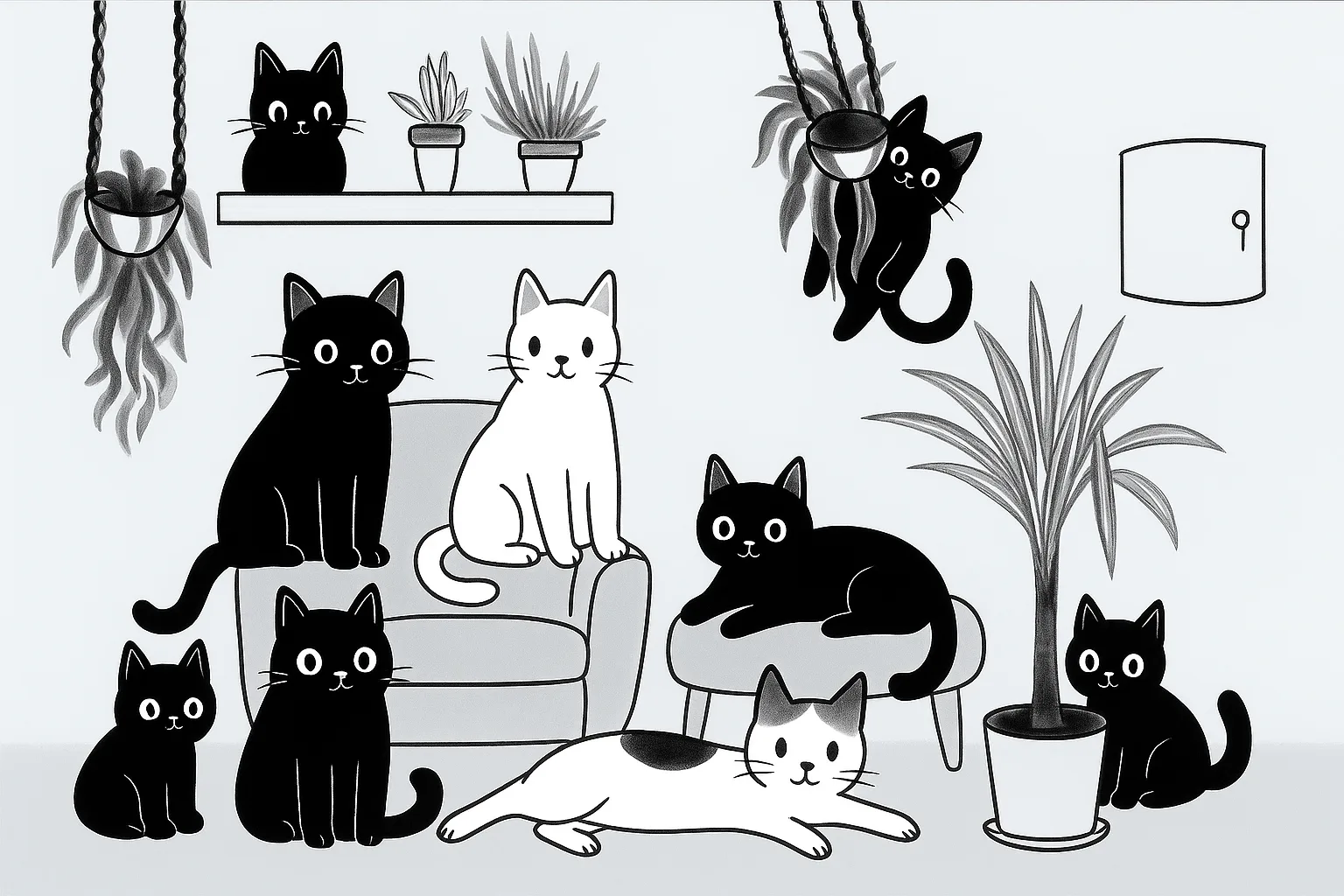
It took conversations with those close to me for me to realize that I did: I talk constantly about cats. I sometimes specialize in other mammals (I’ve also had my insect, bird, and lizard phases), but cats have always been a constant source of well-being for me. I don’t just like petting them: I can spend hours observing them, trying to understand them, analyzing them, and adapting to them in order to make our interspecies relationship as smooth as possible (as well as for my own enjoyment).
Florent’s note: I can confirm — Dr. Jeanne once spent an hour on the phone with me dissecting the behavior of Minette, my cat, trying to understand why she was peeing on my dish rack (the little rascal). A true small-feline expert.
Cats
I have never understood people who can watch football matches for hours on end, or those who enjoy going to concerts or simply observing nature and landscapes. I get bored very quickly. But put me in front of one or more cats, and I completely lose track of time (I have even surprised myself with my ability to remain motionless for very long periods in front of beings themselves frozen while watching equally motionless birds).
I enjoy reading, and anything related to living beings and the mind — ethology or psychology.
Cats
If we start a conversation on any topic — say, the size of a lizard’s egg — I will invariably steer it toward one of my favorite subjects, out of a simple desire to share what makes me come alive (even if it makes us jump topics completely).
Emotions
Anger
During my assessment, I was asked: “What do you feel when you are angry?”
I answered that I felt a kind of euphoria, that I felt strong and invulnerable.
Sadness
But I didn’t really understand the question: I am not considered an angry person. Lively, yes; grumpy sometimes; anxious, certainly — but angry, I have never been described that way.
[I think this question is based on analyses conducted on autistic boys and men, who are more often represented as having spectacular anger outbursts.]
Joy
On the other hand, I have always been at the extremes emotionally. Anyone who spends even a little time around me ends up recognizing it.
I don’t necessarily externalize it, but I feel every emotion that passes through me very intensely, without a filter, and I was long described as “too sensitive.”
Disgust
Science offers an explanation: autistic people often have difficulties with emotional regulation and typically show greater mood variability.
This may be partly explained by an amygdala (the brain region involved in detecting and amplifying emotions) that is more reactive or less well regulated.
Emotional peaks arise quickly and intensely. From the outside, they can appear disproportionate to the situation.
Each emotion is experienced more intensely and also takes longer to subside. The regulatory circuits (prefrontal cortex) function differently.
Fear
Combined with heightened sensory sensitivities, this has led me many times to unexplained crying episodes after a workday, as mentioned earlier. I now know these are called “emotional discharges” (shutdowns or meltdowns) and allow my body to regulate itself after holding in strong emotions and sensations all day.

Inside Out
Some studies suggest hyper-empathy in autistic women. I’m not sure this part applies to me, as I struggle to feel others’ pain. I understand it, I empathize strongly with it, but I often panic in the face of it without quite knowing how to react.
I had to learn over time, using whatever resources I could find (thank you, books and the internet).
One book about consent was particularly helpful, and I’m ready to share my personal tips on how to act when someone is in distress.
First, assume the person is not in a state to think clearly. They may not know what they want — only what they don’t want. Please, do not force them to hug you.
Offer several options instead: hot chocolate, comforting words, solving the problem together, silence, calling a friend, playing with one of their cats, listening to music, having a hug.
They will guide you toward what helps them most — trust my experience.
Reframing empathy
My “lack” of empathy is now a tool I particularly value, now that I have the right frameworks to support any living being in distress.
It allows me to stay grounded, to show sympathy (definition: sharing in another’s joy or sorrow) without dissolving into their suffering and making it my own.
Conclusion
I am a woman
I am a woman, and when I observe other autistic people close to me, I realize how relevant “high-functioning” is in my case.
I can skillfully talk about things that interest me while sparking my interlocutor’s curiosity. My traditionally feminine socialization led me toward socially acceptable interests, and I remain highly attentive to others, as I was taught. My cognitive abilities are an undeniable asset: I learned fairly quickly to adapt, and blending in became second nature to me — to the point that I no longer knew who I was or what I truly wanted.
I am autistic
I am also autistic, and even if it is not always visible, this particular condition makes me vulnerable to noisy and crowded environments, pestilent smells, digestive issues, fatigue, mental blocks, social missteps, and a form of emotional immaturity.
But above all, I am me.
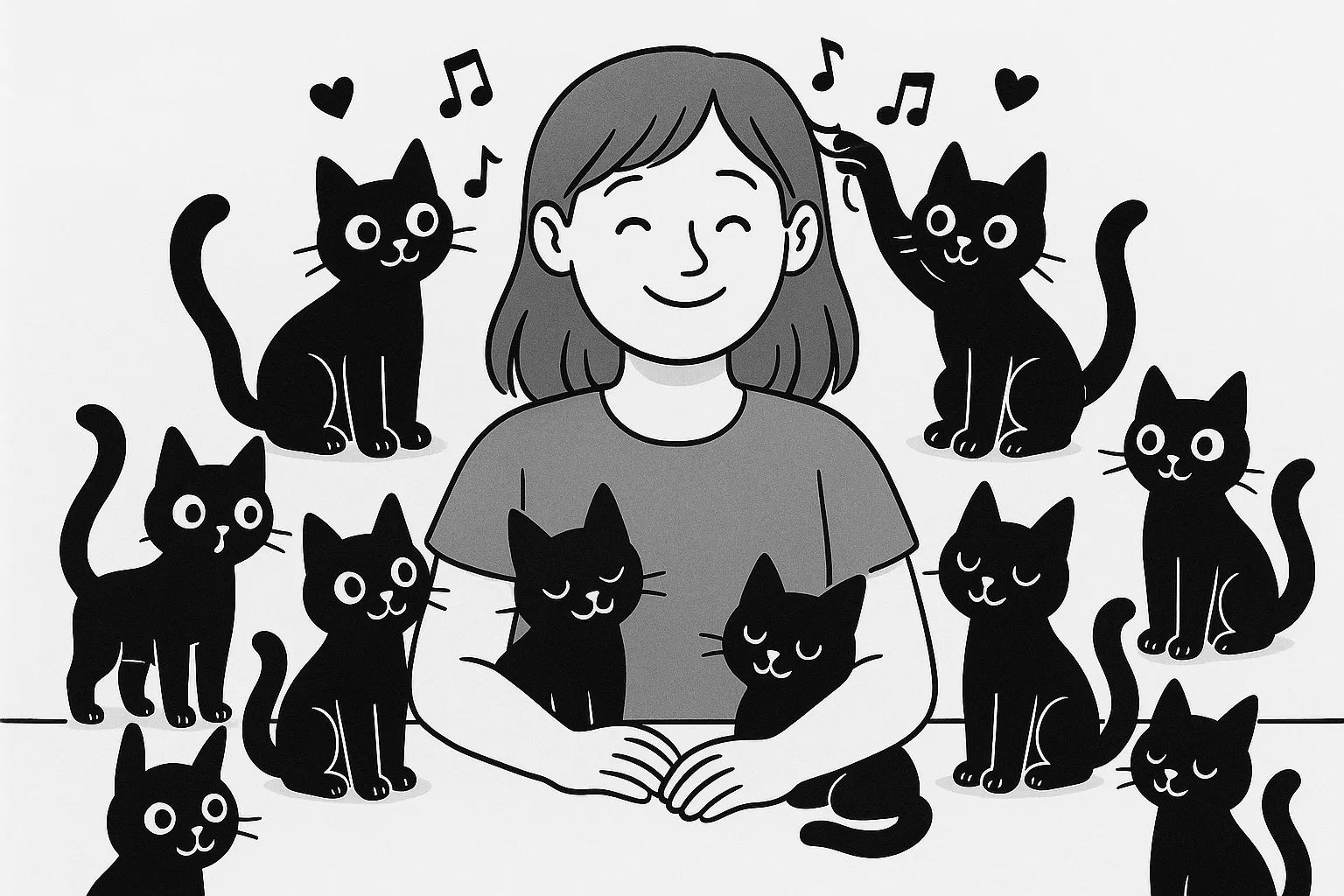
It is a disability, yes — but it makes me who I am, and I would not want to function any differently for anything in the world: I wouldn’t be able to love my cats the way I do.
Further reading: my autism bibliography, primarily featuring books published in French
- La fille pas sympa: La vie chaotique et turbulente d’une jeune autiste Asperger – Julia March
- L’Aspinaute: Une Asperger en voyage sur Terre – Laura Bresson
- Asperger et fière de l’être – Alexandra Reynaud
- L’autisme au féminin – Adeline Lacroix
Sources:
- What Is the Male-to-Female Ratio in Autism Spectrum Disorder? A Systematic Review and Meta-Analysis – PubMed
- Females with autism present features differently – Autism Science Foundation; The Female *Autism Phenotype and Camouflaging: a Narrative Review | Review Journal of Autism and Developmental Disorders
- Gender and Autism – Autism Research Institute ; The art of camouflage: Gender differences in the social behaviors of girls and boys with autism spectrum disorder – PubMed
- Sex differences in structural organization of motor systems and their dissociable links with repetitive/restricted behaviors in children with autism – PubMed ; eprint12078.pdf
- Sex Differences in Psychiatric Comorbidities in Adolescents With Autism Spectrum Disorder: A National Inpatient Sample Analysis – PubMed
- Improving Diagnostic Procedures in Autism for Girls and Women: A Narrative Review – PMC
- The Camouflaging Autistic Traits Questionnaire (CAT-Q) | Embrace Autism
- Auditory Processing in Noise Is Associated With Complex Patterns of Disrupted Functional Connectivity in Autism Spectrum Disorder – PMC
- Autism Spectrum Disorder and auditory sensory alterations: a systematic review on the integrity of cognitive and neuronal functions related to auditory processing – PMC
- Plein de bébés crapaud-accoucheur (celui qui fait bip bip) autour du bassin des poissons rouges | LE VIN DE BLAISE | Facebook
- Empathy in Females With Autism Spectrum Disorder – PMC
- Understanding Hyperempathy in Autism
- Régulation et dysrégulation émotionnelles dans l’autisme : Considérations à l’âge adulte
Originally published in French on: 16 Oct 2025 — translated to English by Florent on: 27 Feb 2026.
